Some pianists proudly claim to have practiced so much that they developed tendonitis, as though it were a badge of honor, proof of long hours put in. What they may not realize, or care to admit, is that tendonitis is usually the result of faulty technique, just as any athletic activity done incorrectly is likely to cause injury. Sound technique, on the other hand, allows you to spend long hours at the piano without harm. Fatigue or slight discomfort is normal, but anything beyond that is a sign that your technique deserves a serious look.
I have had tendonitis from playing once, in college, when I pushed hard to prepare for an exam and ignored the warning signs. Since then I had come to think of myself as immune to playing-related injury.
That changed yesterday.
I had been practicing a vigorous waltz at a blistering tempo. When I moved on to another piece, my left-hand pinkie felt strange, almost painful, and I assumed I had been careless when trimming the nail. After I finished practicing and actually looked at my hand, I found what appeared to be a small blood blister at the corner of the fingertip.
Then I looked at the waltz and understood what had happened. The left-hand pattern looks like this:
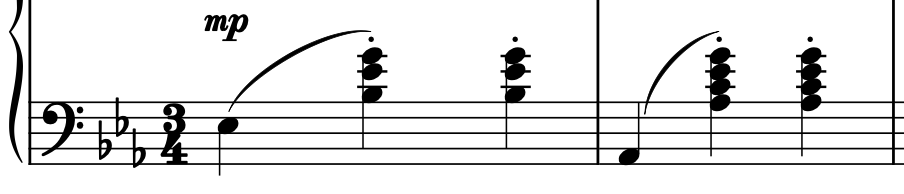
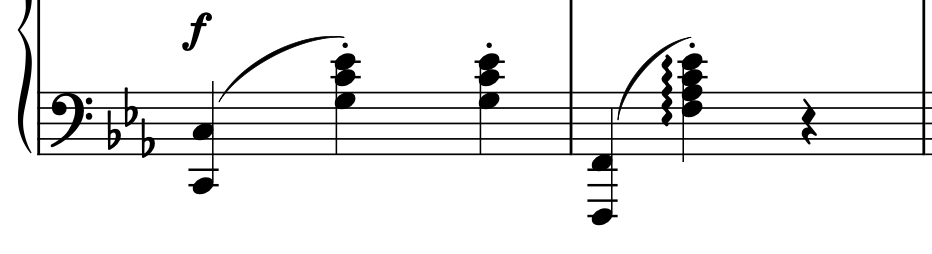
There are only two measures in which LH5 plays only one note. Curious, I counted the pinkie notes in the whole piece and found 126, all within about 35 seconds. Multiply that by many repetitions, of individual sections as well as the entire piece, and the blood blister is hardly a mystery.
My first instinct about the nail may not have been entirely wrong, either. A nail trimmed too short, or with a sharp corner, can be driven into the flesh of the fingertip under repeated impact. The lesson, then, is twofold: be mindful of how many repetitions a single finger endures, and be more careful when trimming, so that the nail does not press into the finger.